Dewidine van der Colff
Interest: Biodiversity, its threats, and living in this ever-changing world.
Here I present a summary of who I am professionally and my main interests.
About
Me
I am a Red List senior scientist at the South African National Biodiversity Institute (SANBI) and recently (2024) completed my PhD at the University of Stellenbosch, investigating the impacts of alien plants on threatened plants in South Africa.
After completing my MSc degree, I became a GroenSebenza intern in 2014, and joined the Botanical Society of South Africa (BotSoc) and SANBI. I contribute to conducting and coordinating Red List assessments for animal and plant species across South Africa. I make use of the data generated through these processes to contribute to the National Biodiversity Assessment for South Africa and spend most days preparing data and engaging with taxon experts to obtain the information required to complete these assessments.
I'm also involved with many other analyses linked to species conservation and data feeding into decision-making at the national level. I am enthusiastic about exploring the major drivers of threat to species, particularly for plants, and using this information to improve how we collect biodiversity data as well as engaging with citizen scientists to contribute to improving our understanding of impacts on species. I enjoy fieldwork and engaging with different people to understand how they connect with nature.
Research Projects

BSc Hon: Veld fire age of Swartland Shale Renosterveld
2011
Here I investigated whether different veld fire ages influence the diversity and species richness within Swartland Shale Renosterveld.
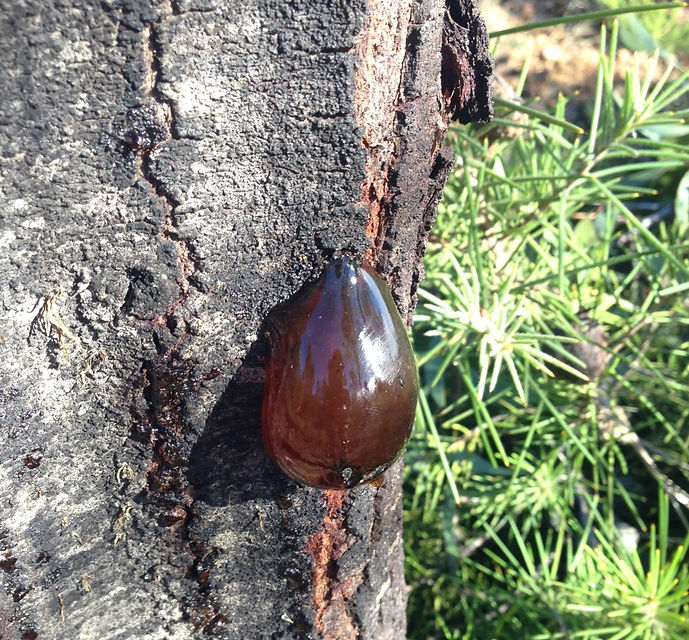
MSc: Interaction of fungi and invertebrates of Acacia mearnsii and Virgilia divaricata
2013-2014
The arthropod composition on Acacia mearsnii (invasive plant) differed from that of the native species (Virgilia divaricataI). A more homogenous pattern emerged for A. mearnsii, while arthropods associated with the native were heterogeneous across the sampled range. Fungal associates were similar between the two tree species within the study area. See publications for further results.

Euryops virgatus - Long-term monitoring
2015-2019
Euryops virgatus is a Critically Endangered plant species only known from a single site in Nieuwoudtville South Africa. This species was discovered in 2009 when it flowered for the first time after grazing was stopped in the Hantam Botanical Gardens.
The Custodians of Rare and Endangered Wildflowers (CREW) Citizen Science project has collected population data since 2009. A long-term data set is maintained with the aim to evaluate the population trends of the species as well as assessing what might be driving changes observed in population numbers. This research is ongoing.

CREW - Monitoring threatened species in South Africa
2015 ongoing
Monitoring threatened species with CREW volunteers in the Greater Cape Floristic Region.

State of Freshwater fishes in South Africa
March 2016 - ongoing
IUCN Red List Assessment of Freshwater Fishes of South Africa. Working with experts from SAIAB and conservation agencies across the country.
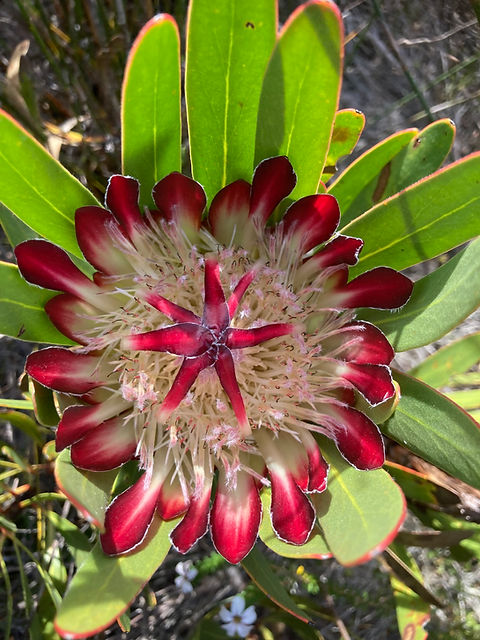
PhD: Impacts of alien plants on threatened native plant species in South Africa
2020-2024
Here I am in investigating different aspects of assessing the impacts of invasive plant species using assessment systems, data types, and considering monitoring options. I am using Proteaceae species as case studies to examine some of these questions, specifically concerning impact data and future impacts.

Assessing the state of a select group of bees species in South Africa
2020-2025
A subset of bees native to South Africa was selected and working with experts, we are conducting IUCN Red List assessments for these native bees.
Publications
See my latest research list on Google Scholar
Comparing the IUCN’s EICAT and Red List to improve assessments of the impact of biological invasions
2020
Van der Colff D, Kumschick S, Foden W, Wilson JRU (2020) Comparing the IUCN’s EICAT and Red List to improve assessments of the impact of biological invasions. Title. In: Wilson J, Daehler C, Richardson D, Lockwood J, Groom Q, Bacher S, Kumschick S, Robinson T, Zengeya T (Eds) Frameworks used in Invasion Science. NeoBiota @@:
@–@. https://doi.org/10.3897/neobiota.@@.52623
Protected areas and endemic freshwater fishes of the Cape Fold Ecoregion: missing the boat for fish conservation?
2020
Jordaan, M.S.; Chakona, A.; van der Colff, D. Protected Areas and Endemic Freshwater Fishes of the Cape Fold Ecoregion: Missing the Boat for Fish Conservation? Front. Environ. Sci. 2020, 8, 502042.
Outcomes of the southern African Lepidoptera conservation assessment (SALCA)
2020
Silvia Mecenero, David A Edge, Hermann S Staude, Bennie H Coetzer, André J Coetzer, Domitilla C Raimondo, Mark C Williams, Adrian J Armstrong, Jonathan B Ball, Justin D Bode, Kevin NA Cockburn, Chris M Dobson, Jeremy CH Dobson, Graham A Henning, Andrew S Morton, Ernest L Pringle, Fanie Rautenbach, Harald ET Selb, Dewidine Van Der Colff, Steve E Woodhall. 2020. Outcomes of the southern African Lepidoptera conservation assessment (SALCA). Metamorphosis. 31(4): 1-160.
South African National Biodiversity Assessment 2018: Technical Report. Volume 2b: Inland Aquatic (Freshwater) Realm.
2019
Van Deventer, H., Smith-Adao, L., Collins, N.B., Grenfell, M., Grundling, A., Grundling, P-L., Impson, D., Job, N., Lötter, M., Ollis, D., Petersen, C., Scherman, P., Sieben, E., Snaddon, K., Tererai, F. & Van der Colff, D. 2019. South African National Biodiversity Assessment 2018: Technical Report. Volume 2b: Inland Aquatic (Freshwater) Realm. CSIR report number CSIR/NRE/ECOS/IR/2019/0004/A. South African National Biodiversity Institute, Pretoria.
Isotopic evidence for oligotrophication of terrestrial ecosystems
2018
Craine, J. M., A. J. Elmore, L. Wang, J. Aranibar, M. Bauters, P. Boeckx, B. E. Crowley, M. A. Dawes, S. Delzon, A. Fajardo, Y. Fang, L. Fujiyoshi, A. Gray, R. Guerrieri, M. J. Gundale, D. J. Hawke, P. Hietz, M. Jonard, E. Kearsley, T. Kenzo, M. Makarov, S. Marañón-Jiménez, T. P. McGlynn, B. E. McNeil, S. G. Mosher, D. M. Nelson, P. L. Peri, J. C. Roggy, R. Sanders-DeMott, M. Song, P. Szpak, P. H. Templer, D. Van der Colff, C. Werner, X. Xu, Y. Yang, G. Yu, and K. Zmudczyńska-Skarbek. 2018. Isotopic evidence for oligotrophication of terrestrial ecosystems. Nature Ecology & Evolution 2:1735-1744.
Comparison of nutrient cycling abilities between the invasive Acacia mearnsii and the native Virgilia divaricata trees growing sympatrically in forest margins in South Africa.
2017
Van der colff, D., Dreyer, L.L., Valentine, A., &Roets, F. 2017. Comparison of nutrient cycling abilities between the invasive Acacia mearnsii and the native Virgilia divaricata trees growing sympatrically in forest margins in South Africa. South African Journal of Botany. 111:358-364.
Difference in physiological response to infection by Ceratocystis tsitsikammensis, a native ophiostomatoid pathogen between a native forest and an exotic forestry tree in South Africa.
2016
Van der colff, D., Dreyer, L.L., Valentine, A., &Roets, F. 2016. Difference in physiological response to infection by Ceratocystis tsitsikammensis, a native ophiostomatoid pathogen between a native forest and an exotic forestry tree in South Africa. Fungal Ecology. 27(A): 107-115.
Contributing author to Shale Gas Development in the Central Karoo: A Scientific Assessment of the Opportunities and Risks.
2016
Scholes, R., Lochner, P., Schreiner, G., Snyman-Van der Walt, L. and de Jager, M. (eds.). 2016. Shale Gas Development in the Central Karoo: A Scientific Assessment of the Opportunities and Risks. CSIR/IU/021MH/EXP/2016/003/A, ISBN 978-0-7988-5631-7
Invasive plant species may serve as a biological corridor for the invertebrate fauna of naturally isolated hosts.
2015
Van der colff, D., Dreyer, L.L., Valentine, A., &Roets, F. 2015. Invasive plant species may serve as a biological corridor for the invertebrate fauna of naturally isolated hosts. Journal of Insect Conservation. 19:863-875.
Gallery
 |  |  |
|---|---|---|
 |  |  |
 |  |

All Videos
Contact Me
Thanks for your interest in my research. Get in touch with any questions or comments regarding my work and publications. I’d love to hear from you.
